Resumo
Liquidity is often reduced to a single question: is there enough money available? In cross-border payments, that is only the beginning. A currency can be available but difficult to trade at the size you need. A competitive quote can disappear before execution. A fast transfer can still leave the recipient waiting.
Stablecoins change how value moves, but they do not remove the need for FX conversion, compliance, local banking access, and reliable delivery. A wallet-to-wallet transfer is one step in a payment—not proof that usable money has reached its destination.
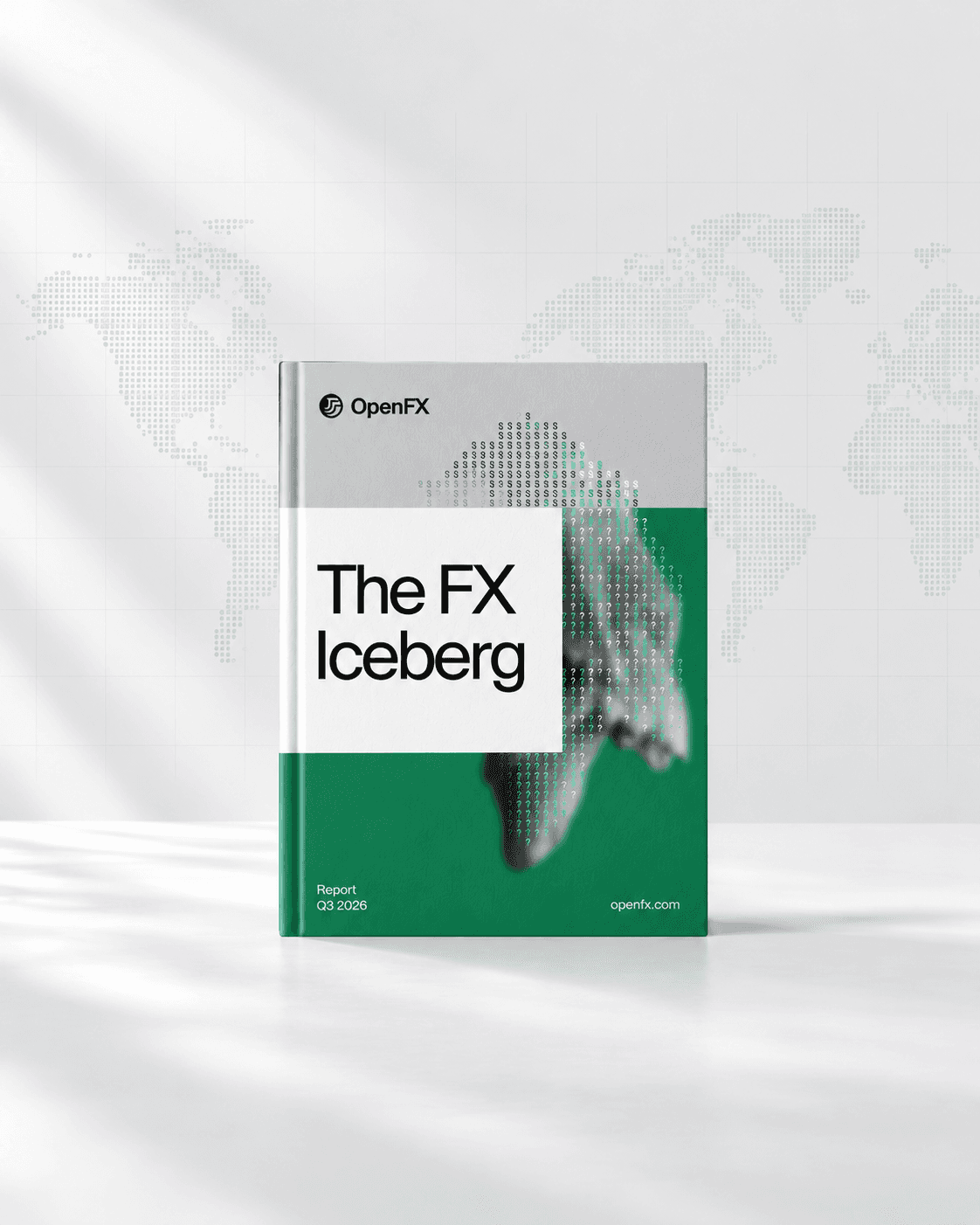
The FX Iceberg looks beneath the visible transaction to examine the operations and infrastructure that make money movement possible. Across three acts, we explore why liquidity varies across markets, introduce a six-part Liquidity Scorecard for evaluating provider claims, and examine what institutions must build to deliver reliable outcomes.
The test is straightforward: can the system move the amount required, at the expected price, and deliver usable money reliably?

O que você encontrará aqui dentro
Three acts trace liquidity from market structure to measurable performance to the infrastructure underneath. These six highlights show what that means in practice.
Ato I
O Estado Atual do FX
Por que os profundos mercados globais de câmbio coexistem com corredores locais limitados — e como o tamanho da transação, o acesso ao mercado e a infraestrutura de liquidação alteram o que a liquidez realmente pode fazer.
Ato I
Duas Arquiteturas, Uma Transação
Acompanhe um pagamento ilustrativo de US$ 50 milhões dos Estados Unidos para a Colômbia por meio de correspondentes bancários e trilhas de stablecoins. Veja o que muda, o que se move para outro lugar e o que ainda precisa funcionar.
Ato II
O Scorecard de Liquidez
Avalie a liquidez por meio de seis métricas, desde a consistência do spread e qualidade da execução até a liquidação sob estresse. Veja se o desempenho se mantém à medida que o tamanho da transação e as condições de mercado mudam.
Ato II
O que você deve perguntar ao seu provedor de liquidez
Transforme alegações sobre spreads apertados, liquidez profunda e liquidação rápida em solicitações específicas de evidências — nos seus volumes de transação, nos seus corredores e sob as condições que você realmente enfrenta.
Ato III
A liquidez é um sistema
Veja como o financiamento, a conformidade, a transferência, a conversão de câmbio e a entrega no destino dependem uns dos outros — e por que a liquidez de alta qualidade precisa ser construída corredor por corredor.
Ato III
O que a liquidez de alta qualidade exige
Vá além do pagamento e explore os relacionamentos bancários, o acesso ao mercado, as reservas de liquidez, os sistemas de conformidade e a infraestrutura técnica que apoiam cada etapa de uma transação confiável.

Uma transferência rápida não é o mesmo que um pagamento concluído.
Nosso Ponto de Vista
Liquidity is a system, not a balance. Available money is only useful when it can be converted, transferred, and delivered. High-quality liquidity depends on the operations and infrastructure that make all three possible.
Transaction size changes the answer. A market that looks deep for a small payment can become expensive or unreliable at institutional scale. Performance has to be tested at the sizes customers actually trade.
Stablecoins change the architecture, not the destination. Moving tokens faster is valuable, but the payment still needs usable funding, executable FX, compliance, and delivery into the recipient’s local bank account.
Provider claims need transaction-level evidence. Tight spreads and fast settlement are starting points for questions, not proof of performance. Ask how prices, execution, and completion behave across size, time, and stress.
Reliable liquidity is built corridor by corridor. Banking relationships, permissions, local currency capacity, and payout systems cannot be assumed. They have to exist before the payment arrives.
Better software cannot replace missing capacity. Automation can coordinate routes, manage inventory, and help resolve exceptions. It cannot create local liquidity or a viable payout route where none exists.